

California's landmark climate disclosure laws, SB 253 (the Climate Corporate Data Accountability Act) and SB 261 (the Climate-Related Financial Risk Act), have been anything but static since they were first signed in 2023. Deadlines have shifted, a federal appeals court has intervened, and the California Air Resources Board (CARB) is still fleshing out how companies will need to comply.
SB 253 is in effect, and the first reporting deadline is November 10, 2026. CARB outlined additional 2027 requirements at its public workshop on July 21, 2026, and issued implementation guidance on September 1, 2026.
In this article we’ll summarize the current state of SB 253, including who it applies to, what CARB has clarified, the November 2026 deadline, and what changes in 2027. We’ll also briefly address the paused companion law SB 261. This way, you can move forward toward compliance deadlines with confidence.
The Current California Climate Disclosure Timeline
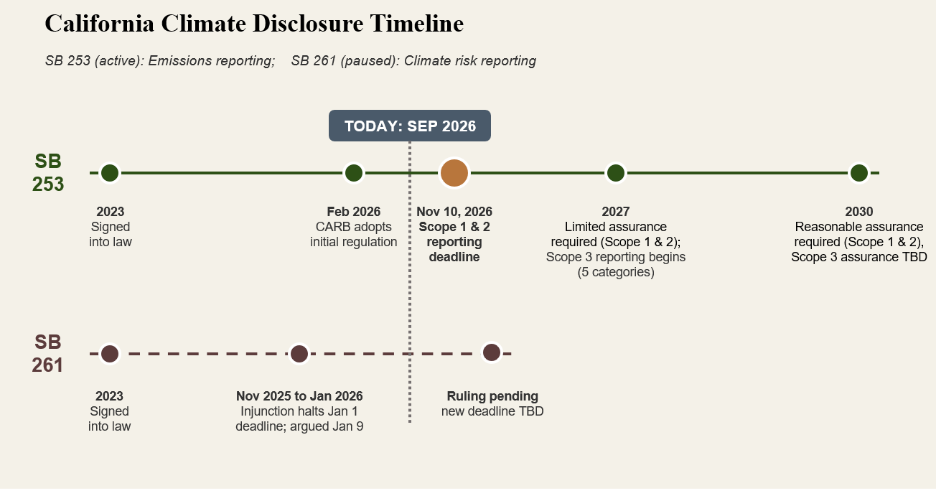 Figure 1. SB 253 keeps moving forward; SB 261 remains paused pending a Ninth Circuit ruling. Source: CARB July 21, 2026 public workshop; Ninth Circuit docket, Chamber of Commerce v. Sanchez, No. 25-5327
SB 253: Compliance Requirements and Current Status
Who Does SB 253 Apply To?
SB 253 applies to U.S. based entities, including public or private, that do business in California and have more than $1 billion in total annual revenue and “doing business in California” (as defined below). CARB estimates that more than 4,000 companies fall within scope.
CARB utilizes a definition from the existing tax law, Section 23101 of the California Revenue and Taxation Code. A company is “doing business in California” if it meets any of these three criteria:
- Conducts physical transactions for profit within the state
- Is commercially domiciled within the state
- Meets any of these financial thresholds for California activity (2025, all inflation-adjusted annually):
- Sales: $757,070 or 25% of worldwide sales
- Property: $75,707 or 25% of total property
- Payroll: $75,707 or 25% of total payroll
SB 253 Reporting Requirements and Compliance Updates
Reporting entities must disclose gross Scope 1 (direct), Scope 2 (indirect, from purchased energy), and eventually Scope 3 (value chain) greenhouse gas emissions, calculated and reported in conformance with the Greenhouse Gas Protocol, the same globally recognized standard used by frameworks like the EU's Corporate Sustainability Reporting Directive (CSRD) and the IFRS S2 climate standard. CARB stated that it wants SB 253 reporting to be interoperable with these other regimes, which may reduce duplicative work for multinational companies already reporting under CSRD or IFRS S2.
On September 1, 2026, CARB released implementation guidance and tools to operationalize these requirements, including detailed Scope 2 factor guidance (made necessary after the EPA discontinued updates to its eGrid emission factors dataset), an optional submission form, and a non-reporting statement option. All three tools are available now.
The Scope 2 guidance addresses the EPA's eGRID dataset used for Scope 2 calculations. The EPA has not released its 2024 vintage on its usual schedule. CARB's guidance allows companies to use the most recent official EPA release (eGRID 2023) or alternative credible sources such as the Cornerstone Sustainability Data Initiative's eGRID 2024 (generated from EPA's public source code). Companies should document which source they use and the basis for that choice.
CARB's voluntary online intake platform has structured data fields aligned to GHG Protocol requirements. Companies are encouraged to provide 'additional details' such as descriptions of methodologies, data sources, global warming potential (GWP) values, emission factors, organizational boundaries, and any estimation assumptions used (measurement uncertainty documentation will be required beginning in 2027). Entities can file a non-reporting statement to document either (1) falling outside SB 253's scope (revenue under $1B or not doing business in California), or (2) not collecting Scope 1 and Scope 2 emissions data as of December 5, 2024 and not planning to do so at the time of CARB's enforcement notice.
2026 Extended Deadline for SB 253 Compliance
CARB's rulemaking has been repeatedly delayed. The final regulatory package for the initial rule was submitted to the California Office of Administrative Law on May 20, 2026, but CARB withdrew it to make limited clarifying changes before resubmission on August 11, 2026. As a result, the 2026 reporting deadline for Scope 1 and Scope 2 emissions has been pushed to November 10, 2026, three months later than the previously discussed August 10, 2026 date.
This year's reporting requirement is tied to fiscal year end: entities with a fiscal year ending between January 1 and February 1, 2026 report data from that fiscal year, while entities whose fiscal year ends later report data from the fiscal year ending in 2025. CARB has indicated companies with more recent data may voluntarily report it given the extended deadline.
2027 and Beyond: The SB 253 Rules Get More Detailed
The 2026 reporting cycle covers Scope 1 and 2 only, with a simplified submission process. Starting in 2027 and onward, CARB will require phased-in Scope 3 emissions, detailed Scope 2 methodologies broken out by source type, quantification transparency documentation, and independent limited assurance.
At the July 21, 2026 public workshop, CARB outlined the following proposed elements for 2027 reporting:
- Scope 3 phase in. Rather than requiring all 15 Scope 3 categories, CARB proposes requiring the five categories with the most mature data starting in 2027, including: purchased goods and services, fuel and energy related activities, waste generated during operations, business travel, and employee commuting. The other ten categories would remain voluntary.
- Scope 2 detail. Companies would need to report Scope 2 emissions by source type (electricity, steam, heating, cooling), broken out by individual greenhouse gas. Specific Scope 2 GHGs include carbon dioxide (CO2), methane (CH4), nitrous oxide (N2O), hydrofluorocarbons (HFCs), perfluorocarbons (PFCs), sulfur hexafluoride (SF6), and nitrogen trifluoride (NF3) and the sum of those gases expressed in metric tons of CO2e. Submissions must include both the location-based and market-based methods. Companies currently using emission factors in the form of carbon equivalents (i.e., kg CO₂e per kWh) will need to adjust their calculations to accommodate this requirement.
- Quantification transparency. Entities must disclose their consolidation approach, GWP values used, emission factor sources, whether direct measurement or estimation methods were used, and a qualitative or quantitative assessment of measurement uncertainty.
- Data exclusions and recalculation. Companies may exclude certain emissions sources or Scope 3 categories under defined materiality-based criteria, documenting the basis. Materiality determinations should align with GHG quantification standards and the company's existing disclosure frameworks (i.e., SEC, CSRD). A cumulative change greater than 5% of total GHG emissions would trigger recalculation and restatement of prior year emissions data, applicable to the company’s second year of SB253 reporting.
- Biogenic emissions and voluntary offsets. These must be disclosed separately from Scope 1, 2, and 3 totals, with clear documentation of methodology.
SB 253 Requires Assurance In 2027
Starting in 2027, limited assurance from an independent provider is required. While SB 253 technically requires limited assurance on Scope 1 and Scope 2 emissions beginning in 2026, CARB has exercised enforcement discretion for the first reporting cycle, accepting 2026 submissions with or without assurance.
CARB has proposed allowing several recognized assurance standards:
- AA1000 Assurance Standard (AA1000AS v3)
- AICPA Attestation Auditing Standards AT-C Section 210
- ISAE 3410 (with ISAE 3000, for engagements starting before December 15, 2026)
- ISSA 5000 (for engagements starting on or after December 15, 2026)
- ISO 14064-3:2019
The selection of standard depends primarily on your provider's capabilities and your existing audit infrastructure. AA1000AS v3 and ISO 14064-3 are ESG-focused standards with deep GHG expertise; AICPA AT-C Section 210 and ISAE 3410 are accounting-profession standards that integrate well with financial audits; ISSA 5000 (effective December 15, 2026) is the emerging global sustainability assurance standard. An assurance report meeting any of these standards must identify the standard applied, the scope of emissions covered, whether biogenic CO₂ is included, and the assurance providers credentials, independence statement, and conclusion.
Companies should begin conversations with potential assurance providers now to understand which standards they can support and when capacity constraints may emerge. The market for qualified, independent assurance providers is still developing which could pose capacity constraints for companies waiting until 2027 to engage a provider. Early engagement also allows time to remediate any data quality issues the provider identifies in preliminary reviews.
Insurance Company Exemption in SB 253 Ends After 2026
Insurance companies were exempted from 2026 SB 253 reporting to avoid duplicating parallel disclosures made to the California Department of Insurance (CDI). CARB staff have now concluded that CDI's reporting doesn't cover Scope 3 emissions or assurance, meaning it won't satisfy SB 253 starting in 2027. Insurers will be able to submit a single report satisfying both regimes, but only if it's supplemented to meet every CARB requirement.
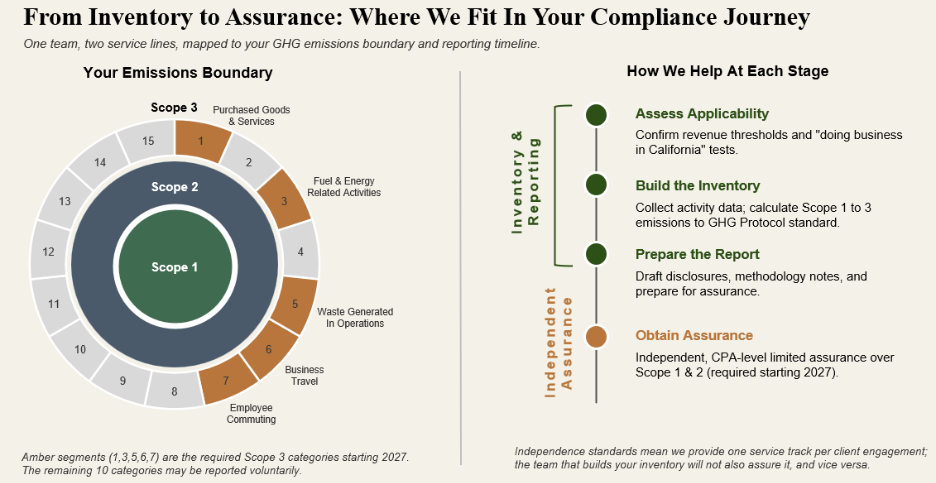 Figure 2. Your emissions boundary, and where our team supports each stage of the compliance journey.
Applicability
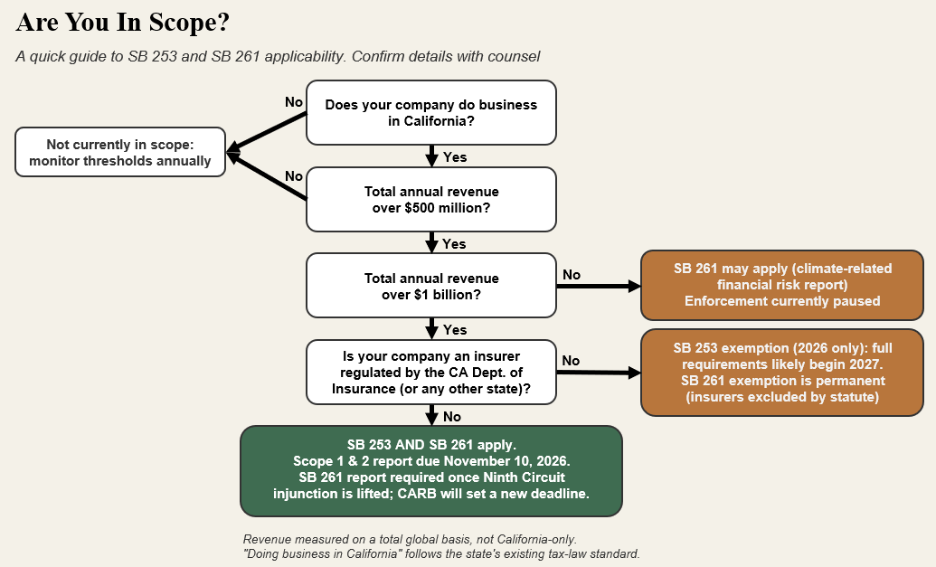 Figure 3. A quick guide to SB 253 and SB 261 applicability.
U.S. companies with more than $1 billion in annual revenue doing business in California: are in scope for SB 253 today, with a Scope 1/2 reporting deadline of November 10, 2026.
Companies already reporting Scope 3 emissions data or facing CSRD, IFRS S2, or SEC climate related obligations: CARB's stated goal of interoperability means work you've already done elsewhere may substantially reduce your California compliance burden. Companies should still verify alignment on Scope 2 factors, biogenic emissions treatment, and quantification of uncertainty.
Insurance companies operating in California: the current SB 253 exemption expires after 2026, and you must file a SB 253 report starting in 2027 rather than relying on CDI filings.
Recommended Next Steps to Prepare for Compliance with SB 253
- Confirm applicability. Determine whether your organization meets CARB’s revenue thresholds and “doing business in California”
- Inventory your Scope 1 and 2 data. Begin collecting Scope 1 and 2 emissions data if this has not started; the November 10, 2026 deadline is approaching. Request historical consumption data to become comfortable with trends and drivers. If data is unavailable, document with CARB’s data-collection attestation path.
- Validate your Scope 2 factors against CARB's September 1 guidance. Download the updated eGrid replacement factors, regional grid averages, and CARB's factor hierarchy. If you've been using old EPA eGrid data, cross-check with CARB's approved alternatives. Prepare calculations to disaggregate Scope 2 emissions into individual GHGs.
- Map your methodology to the GHG Protocol. CARB's proposed rules closely track the GHG Protocol Corporate Standard, Scope 2 Guidance, and Scope 3 Standard. Review and document your choices for consolidation approach (equity share, financial control, operational control), GWP values, and emissions factor sourcing.
- Start the assurance conversation. With limited assurance required starting in 2027, and a still developing market of qualified providers, it is advisable to begin vetting assurance partners now will be better positioned than those who wait. Use 2025 or 2026 YTD data as a test run to maximize readiness.
- Map your 2027 Scope 3 data ecosystem. Building upstream surveys or supplier data portals can take 6–12 months. Companies that begin engagement letters and pilot data calls in Q4 2026 will assist in readiness by Q1 2027.
- Don't drop SB 261 preparation (enforcement paused). SB 261 remains enjoined pending a Ninth Circuit First Amendment appeal. A ruling is expected by Q3 2026. Companies in scope ($500M+ revenue) should keep their climate risk reporting infrastructure ready, even though the January 1, 2026 deadline is no longer enforceable. If the injunction is lifted, CARB may set a new deadline with limited advance notice.
How Schellman Can Help with Your SB 253 Compliance Journey
Our team supports companies at each stage of compliance:
- GHG Inventory Measurement & Reporting Support: We help gather activity data, build a defensible Scope 1, 2, and 3 emissions inventory aligned with the Greenhouse Gas Protocol, document your quantification methodology, and prepare a report that's ready for regulatory submission and assurance.
- CPA-led Independent Assurance: As a licensed CPA firm, we provide independent assurance over Scope 1 and Scope 2 emissions disclosures under AICPA AT-C Section 210 and other accepted standards, bringing the same rigor and professional accountability that governs financial statement audits.
Independence standards mean we provide one of these two services per client, not both: if we build the inventory, we do not also provide assurance for it, and vice versa.
For a readiness assessment ahead of the November 2026 deadline, contact our team.
This article reflects publicly available information as of September 2026, including CARB's July 21, 2026, public workshop materials, and September 1, 2026, guidance updates. Because rulemaking and related litigation are ongoing, requirements described here may change. A Ninth Circuit ruling on the SB 261 First Amendment challenge is expected by Q3 2026. This content is provided for general informational purposes and does not constitute legal or accounting advice. For advice specific to your organization's compliance status and reporting timeline, please consult with your audit advisor.
Sources:
- California Air Resources Board, SB 253 Public Workshop Presentation, July 21, 2026
- CARB Corporate GHG Reporting Guidance for SB253 for 2026, September 1, 2026
- State of California Franchise Tax Board
Various law firm client alerts on Ninth Circuit proceedings in Chamber of Commerce of the United States v. Randolph/Sanchez, No. 25-5327 (9th Cir.)